你是我的姐妹
三星将在印度推出廉价手机:与小米等竞争对手竞争_我的网站

A |
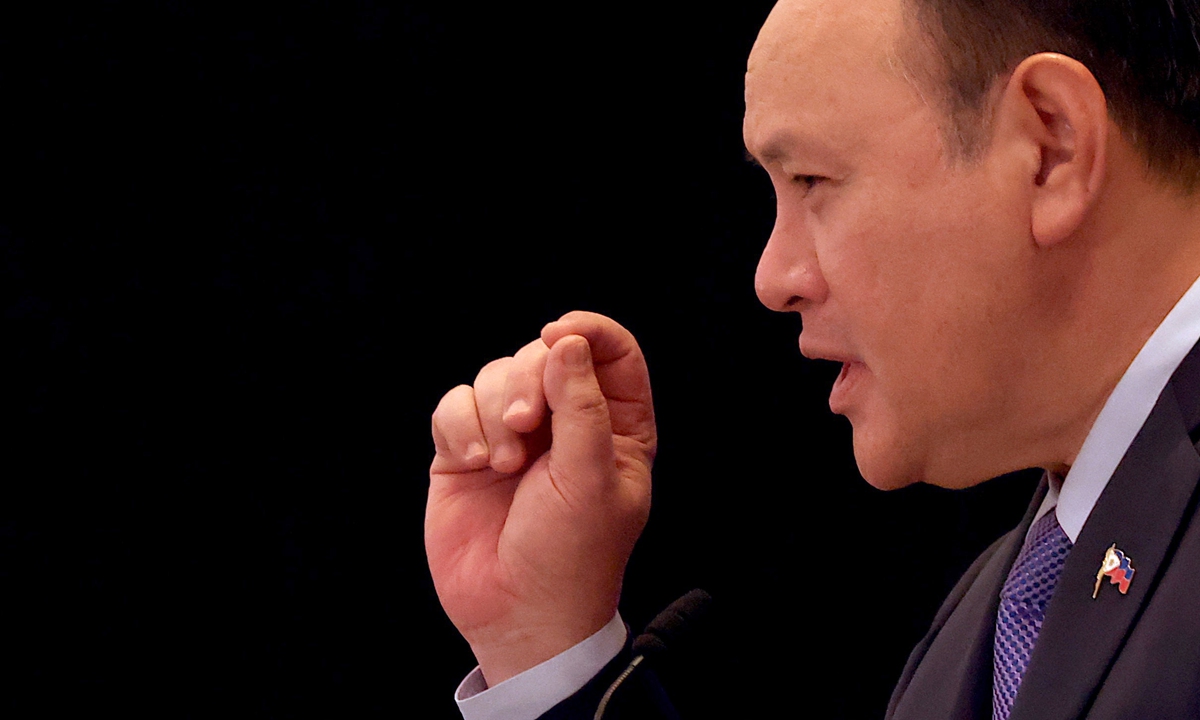
The statement came after Teodoro, who was sanctioned by China in June, accused the Chinese Foreign Ministry on Saturday of continuing to evade what he called the "crucial issue": whether the Chinese nationals arrested in the Philippines were involved in illegal activities, and whether Chinese embassy officials have intervened in local law enforcement processes, according to Philstar.
Ji Lingpeng, spokesperson for the Chinese Embassy in the Philippines, directly addressed both questions in Saturday's statement.
Ji noted that a May 28 resolution by Philippine prosecution authorities had found insufficient evidence to support allegations against the workers and ordered all 70 Chinese nationals to be released.
"Yet Teodoro continues to accuse them of engaging in illegal activities in the Philippines. Does he respect the rule of law and the decisions of the judiciary?" Ji asked.
Ji also questioned whether violations of Philippine law should be determined by the defense secretary or the country's judicial authorities.
"Secretary Teodoro's remarks are completely unfounded. They distort the facts and turn black into white," Ji said.
The embassy raised multiple questions about the May operation, which Ji said Teodoro had instructed the Philippine armed forces to join. The spokesperson asked why unarmed workers rather than those responsible for managing the plant had been detained, why only Chinese workers were arrested while Filipino employees were released at the scene, and why the Chinese nationals were transported to Manila aboard a military aircraft.
The embassy also said some workers had been instructed to put on personal protective equipment and pose for photographs during the raid, which were subsequently used in publicity surrounding the case.
Responding to Teodoro's claim that the embassy had intervened in Philippine law enforcement, Ji said anyone with a basic understanding of diplomacy would know that protecting the safety and legitimate rights and interests of its nationals is a fundamental responsibility of an embassy.
"Regardless of the reason a Chinese national is detained, the Chinese Embassy has the right and responsibility to conduct consular visits, provide consular protection, make communication with and demarches to relevant Philippine law-enforcement authorities to ensure humane, fair and just treatment of detained Chinese nationals," Ji said.
"We fully respect the Philippines' judicial sovereignty and the lawful handling of cases by its relevant law-enforcement authorities," Ji said. "If solid evidence proves a foreign national is in violation of Philippine law, he or she shall be brought to justice in accordance with the law. The same is true in China. However, we firmly oppose any discriminatory or selective law enforcement campaigns targeting Chinese nationals by the Philippine side out of political considerations."
The Philippine Department of National Defense responded in a separate statement on Sunday, claiming that "The Chinese Embassy's response does not contain any answers," adding that "this is, in legal practice, an implied admission of culpability," according to Inquirer.net.
All 70 Chinese nationals associated with the steel plant in Mindanao have been released, Xinhua News Agency reported in June. The Manila Times reported that they were released after authorities cited insufficient evidence of specific immigration and labor violations.
Renewing allegations against the Chinese workers after their release for insufficient evidence lacks justification, Chen Xiangmiao, director of the World Navy Research Center at the National Institute for South China Sea Studies, told the Global Times on Sunday.
Having a defense secretary personally direct the armed forces to participate in an operation targeting civilian workers departs from normal law enforcement procedures, Chen said. Teodoro's continued politicization of the case after the workers' release reflects an intensification of anti-China agitation by certain forces in the Philippines, he noted.
Selective investigations and enforcement targeting Chinese nationals are driven not by law but by political manipulation designed to cater to domestic anti-China sentiment, Chen said.
The trend shows that anti-China forces represented by Teodoro intend to continue fomenting hostility toward China, shaping negative public perceptions and provoking antagonism between the peoples of the two countries, with serious consequences for bilateral relations, he added.
The resulting hostile environment could also have severe negative consequences for Chinese investment in the Philippines and normal people-to-people exchanges, he said.
Chinese Foreign Ministry spokesperson Guo Jiakun said on Friday that "it's learned that it was exactly this defense secretary who personally led the armed forces to seize and detain Chinese nationals lawfully working in the Philippines. This person's consistent attacks and smears against China harm not only the bilateral relations. It is the interests of the Philippines and all its people that will bear the brunt."
。北京时间1月14日上午,路透社报道,三星计划在印度市场推出一款便宜的手机,该手机将在全球发布,目标是重新获得中国竞争对手如小米在印度的市场份额。三星印度移动业务主管Asim Warsi表示,三星计划通过其网站和亚马逊印度(Amazon India)销售其最新M系列手机中的三款,这将使其在线销售翻番。”M系列是一款在印度大约千年用户中开发的手机,”他说。这些手机也将在1月底在印度上市后进入全球市场。三星M20手机概念图他拒绝透露细节,但表示在线销售占该公司手机总销量的两位数比例。瓦尔西还表示,这些印度制造的手机将配备更大的电池和快速充电功能,其价格从1万卢比(141.8美元)到2万卢比不等。

B | 三星更关注印度市场。印度拥有超过10亿的移动用户,其中约3.5亿人尚未使用智能手机。

C | 在2000个服务中心的支持下,三星的印度业务通过25万个零售店和2000多家商店销售手机。据商业智能平台paper.vc获取的监管文件显示,截至2018年3月底,三星在印度的手机销售额在12个月内达到了3735亿卢比(53亿美元)。然而,根据一家研究公司Counterpoint的数据,三星的市场份额在2018年的三个季度中有两个季度的出货量落后于小米。去年,三星在印度首都新德里郊区开设了世界上最大的手机制造商,并在班加罗尔开设了世界上最大的手机商店。”在印度,我们为消费者投资了大量的数据分析、研究和开发,”瓦西说。他们与世界许多其他地方的消费者有着良好的联系。
Current article:http://00ftux.zangjiwuqihuncongcherua.cyou/42jm/20260826/7463833.html
Published on:09:03:49